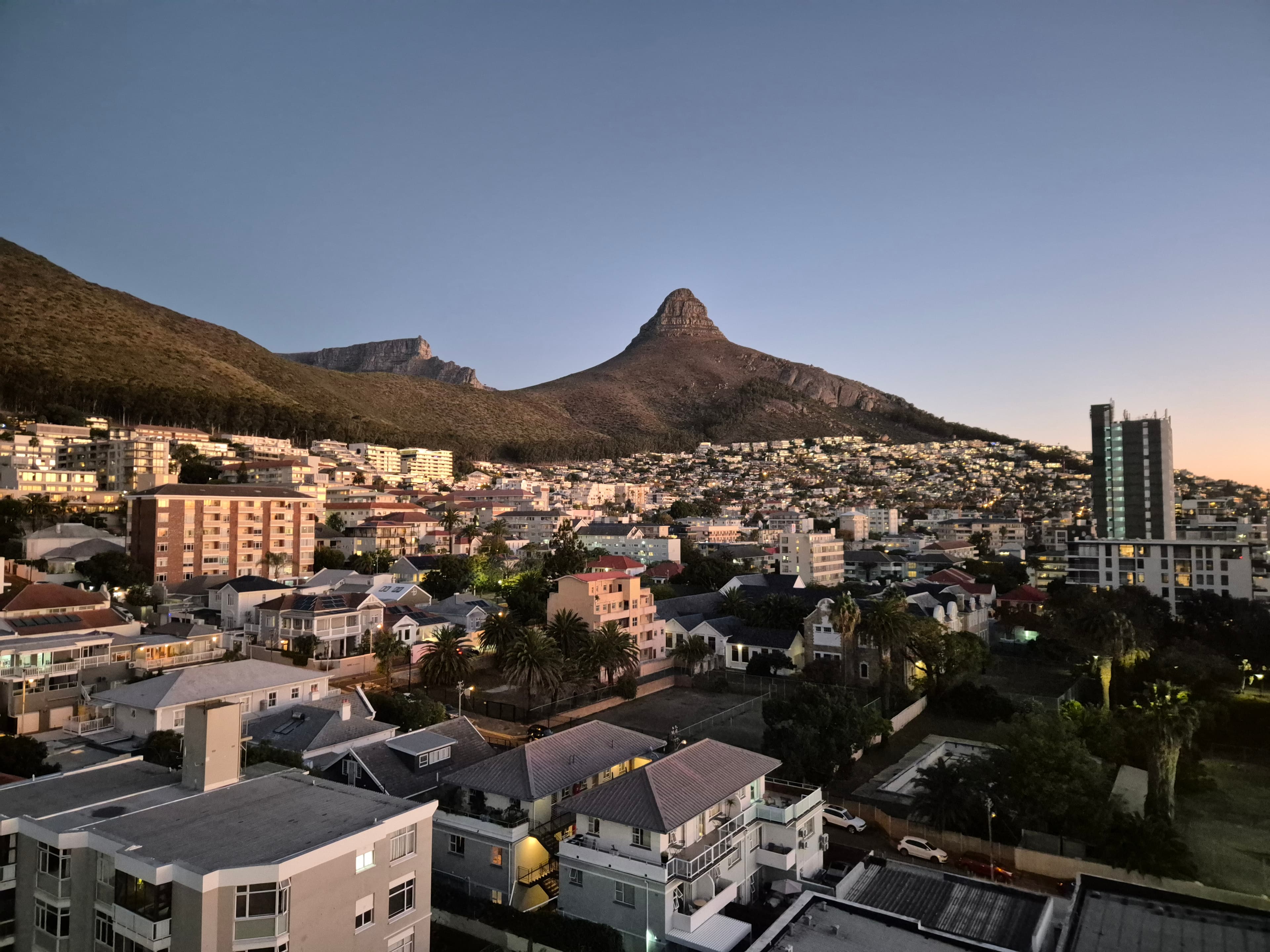

Sea Point rooftops looking toward Table Mountain, Cape Town — Atlantic Seaboard property
Cross-Border Property Advisory

Secure top cash-flowing freehold property in South Africa

We guide investors worldwide through every step of buying property in South Africa — and help those seeking the freedom that freehold ownership here offers, whether for lifestyle, retirement, or flexibility. Cape Town and the Garden Route are our focus, with the same five-phase methodology applied nationwide.

We specialise in crunching the data behind each property so you can make the investment choices that suit your lifestyle and investment goals. With eyes and a data analysis team on the ground, together with a single workspace for every decision.

5
Phase Due Diligence
Cape Town & Garden Route, South Africa
Boots on the Ground
1
One Workspace, Every Decision
Anywhere → SA
Buyers Worldwide, One Playbook.
Anywhere → South Africa

CPT & Garden Route
South Africa

Buyers from around the world are drawn to the Cape for good reason - a Mediterranean climate of dry, warm summers and mild, wet winters, on a coastline that rivals anywhere on the planet. International buyers have no reliable way to compare value across suburbs never walked, no read on which areas are rising and which just photograph well. Gathering the data, verifying it, and turning it into an accurate comparison is a full-time job. Let us do it for you!

See the process →
High-performing turnkey rentals
We find you turnkey rentals with strong tenancy demand.
Suburb-by-suburb data
Recent sales and live listings, benchmarked so you compare like a local.
Sectional title (strata) due diligence
Levy records, body corporate financials, scheme rules.
Offer to Purchase
The OTP is binding in SA — conditions must be right from the start.
Independent inspection
Reliable building, beetle inspection, and body corporate due diligence — all before you sign.
City House Price Trajectory

Decisions backed by evidence rather than a selling agent's pitch.

Dwelling-value change by city since end-2021, each market tracked in its own currency. Cape Town has led South African metros on semigration-driven demand; Johannesburg started weak and is only just turning up. In Australia, the 2022–2023 rate-hike downturn hit Sydney and Melbourne hard, Sydney recovered through 2023–2025 before easing into a 2026 downturn, and Melbourne never fully recovered.

Cape TownJohannesburgSydneyMelbourne
90100110120130Dec '21Dec '23Dec '25Cape Town +33%Johannesburg +11%Sydney +4%Melbourne −7%
City dwelling-value index since December 2021
QuarterCape TownJohannesburgSydneyMelbourne
Dec '21100.0100.0100.0100.0
Dec '22106.0102.087.991.9
Dec '23109.0102.097.793.7
Dec '24117.0105.0100.090.9
Dec '25127.0108.0106.095.3
Aug '26133.0111.0103.992.5

Sydney and Melbourne: Cotality (CoreLogic) Home Value Index calendar-year change compounded from a Dec 2021 base — 2022 (-12.1% / -8.1%), 2023 (+11.1% / +2.0%), 2024 (+2.3% / -3.0%), 2025 (+6.0% / +4.8%), 2026 YTD to August (-2.0% / -3.0%). Cape Town and Johannesburg: derived from FNB Property Barometer national HPI (3.5% / 1.0% / 1.2% / 3.8% / 4.5% YTD) with a Western Cape outperformance adjustment consistent with MyProperty's Western Cape index (+8.7% in 2025) and Gauteng underperformance per FNB regional reporting. City-metro figures are estimated within these public bounds — replace with Lightstone or FNB metro subscription series for audit-grade values.

International Demand

Where foreign buyers are heading.

Share of premium-suburb purchases made by foreign buyers over the last three years. International capital keeps flowing into Cape Town's premium suburbs — while Australia has pushed foreign buyers out of its established market, first with surcharges and then with an outright ban.

Cape TownJohannesburgSydneyMelbourne
04812Oct '23Apr '24Oct '24Apr '25Oct '25Apr '26AU foreign-buyer ban — Apr '25Cape Town 13%Johannesburg 3%Sydney 1%Melbourne 1%
Share of premium purchases by foreign buyers
QuarterCape TownJohannesburgSydneyMelbourne
Oct '238.4%2.4%5.5%6.9%
Jan '248.9%2.5%5.7%7.1%
Apr '249.3%2.5%5.8%7.0%
Jul '249.8%2.6%5.6%6.8%
Oct '2410.2%2.6%5.4%6.6%
Jan '2510.7%2.7%5.5%6.4%
Apr '2511.1%2.7%4.8%5.9%
Jul '2511.5%2.8%1.9%2.2%
Oct '2511.9%2.8%1.4%1.6%
Jan '2612.2%2.9%1.2%1.3%
Apr '2612.4%2.9%1.1%1.2%
Jul '2612.6%3.0%1.0%1.1%

Indicative share of purchases by non-resident buyers in premium segments. Sources: FIRB quarterly activity reports and NAB Residential Property Survey (Sydney & Melbourne); Lightstone deeds data and agency reporting (Cape Town Atlantic Seaboard, Johannesburg northern suburbs). Australia banned foreign purchases of established dwellings from April 2025, extended to 30 June 2029. Illustrative of direction, not audited data.

The Investment Case

Same capital, two very different markets.

Where does the same capital work harder? A side-by-side view of a typical apartment purchase in Sydney versus Cape Town — figures shown in Australian dollars for a like-for-like read, but the pattern travels wherever you're buying from.

Cape Town, WCSouth AfricaSydney, NSWAustralia
Capital
Freehold ownershipYes — full freehold title, even as a non-residentYes — but PR/citizens only without FIRB approval
Capital growth (last 4 years)≈ +35% — premium apartment prices compounding≈ +5% — cycle-flat, softening again in 2026
Capital required (two-bed apartment)≈ A$260k–520k — half the capital or less≈ A$800k–1.2M
CGT discount on sale60% discount — effective rate at most 18%0% discount on established dwellings — effective rate up to 47%
Taxes & Costs
Direction of tax policyCore settings unchanged since 2016A moving target
Tax on purchaseFirst ~R1.2M exempt — transfer duty ≈ 3.5–7.5% (≈ A$9k–38k)Stamp duty ≈ 4–4.5% of purchase price (≈ A$33k–50k)
Foreign buyer surcharge0% — no surcharge or restriction, new and existing alike≈ 8% surcharge on new dwellings — established dwellings banned outright
Annual land taxNoneYes — and expanding
Rental income taxFirst ≈ R99k effectively tax-free, then from 18%Up to 47% — stacked on top of your salary

Indicative ranges for typical apartment purchases as at 2026 — actual figures vary by suburb, scheme, and strategy. This is analysis, not financial advice — confirm your position with qualified advisers in both jurisdictions.

The Purchasing Process

Five phases.
One workspace.
No surprises.

Every engagement runs through the same five-phase workflow. Each phase has a defined output, a clear timeline, and everything lands in your customised workspace — so you can keep track of progress and easily find what you are looking for.

We build your brief around budget, use case, and target area, then hunt for turnkey rentals that perform from day one — on-market and off-market. We benchmark each property against recent Deeds Office sales, screen for sectional title (strata) red flags, and model what it actually returns: rental comparables, levies, rates and taxes, management fees, insurance, and maintenance. The survivors are scored on our bespoke built web platform for ease and convenience.

Outputs
  • Shortlist high-performing turnkey rentals, with strong tenancy demand
  • Renter profile data for the suburbs selected
  • Hard numbers on what each property returns
  • Every running cost accounted for — no surprises
  • A vetted managing agent, ready to take over
Key Considerations
Sectional title (strata) screening
Body corporate levies, special levies, and building performance can significantly affect affordability and use. We screen for these before shortlisting.
Deeds Office sales data
Historical transfer prices are publicly available through the Deeds Office — a reliable benchmark for offer pricing.
Flood and fire risk
A flood-line or wildfire-zone check takes minutes and can disqualify a property outright, before you spend anything on it.
Servitudes and services
Registered servitudes, encumbrances, and the position of sewer and municipal connections decide what you can add to the property later.
Zoning and overlays
Heritage, coastal, and environmental overlays affect insurance premiums and any future plans to extend or develop.
Streetscape and ownership mix
The surrounding street tells you what the listing photos won't. We also check the owner-occupier to investor ratio in the pocket.
Our Team

People on both ends of the deal.

One team across two countries.

Karl van der Westhuizen

Karl van der Westhuizen

Co-Founder & Property Consultant
Cape Town & Garden Route, South Africa

Karl is our eyes on the ground in South Africa, based between Cape Town and the Garden Route. He came to property from a background in tourism and guiding — years spent showing people the coast, reading conditions, and learning what separates a great investment property from a dud. A keen photographer and a serious angler, he brings the same patience and attention to a building inspection that he brings to the water.

He handles the in-country work: dealing directly with the leasing and real estate agents, walking you through properties on live video, and drawing on niche area specialists to verify what the listing leaves out — inspecting in person where a property warrants it, and gathering evidence on how each market actually performs rather than marketing gloss. When you can’t be in the room, Karl is.

Jean du Toit

Jean du Toit

Co-Founder & Customer Experience
Sydney, Australia

Jean has lived and worked on both sides of this route and founded Sydney to Sea Point after his own struggle house hunting across time zones — and discovering, along the way, just how welcoming the South African property market is to overseas investment. He knows the cross-border buy firsthand: he purchased a Melbourne apartment off-plan from the UK in 2013, and has since served as hands-on chairman of the 140+ lot scheme.

Jean comes from a technology background, and he runs the advisory end of every engagement: mapping the process to your situation, coordinating the in-country specialists, and making sure each decision is backed by evidence rather than a selling agent’s pitch. He also built and operates our bespoke built Talking Tenant, the workspace every client uses to compare shortlisted properties on the same axes.

Beyond the Property

Two routes to permanent residency.

Buying property in South Africa does not, on its own, grant you residency — the two are separate processes. For clients who want more than a holiday home, two routes lead to permanent residency: one grants it outright, the other arrives there by way of temporary residence. This is orientation, not immigration advice; we work alongside registered immigration practitioners who handle the applications.

Financial Independence Permit

A direct route to permanent residency for applicants who can prove a prescribed level of net worth, plus a one-off fee payable to Home Affairs. It is not tied to a job, a business, or your age, which makes it the cleanest option for most investors.

  • Net worth ≈ R12 million (≈ US$650k) — the prescribed threshold
  • Independent audit of your assets required
  • Permanent residency from the outset
  • No employment or business obligation

Retired Person Visa

For applicants who can show a qualifying monthly income from a pension, retirement annuity, or irrevocable trust. Despite the name there is no minimum age — it is the income stream that qualifies you, not your birthday.

  • Income ≈ R37,000 / month (≈ US$2,000), or a lump-sum equivalent
  • Issued as temporary residence, renewable long-term
  • Permanent residency available on the same basis
  • Rental income from your property may support the case

Visitor's Visa

Most passport holders from Australia, the UK, the US, and much of Europe enter visa-free for up to 90 days on arrival. Home Affairs will consider a single extension for a further 90 days if you apply before your stay lapses, taking you to roughly six months in-country. Some travellers then step out — a safari in Namibia, a few days in Mauritius — and re-enter for a fresh 90-day stamp.

Other routes

Depending on your circumstances, a Business Visa (establishing a qualifying enterprise), a Critical Skills Visa (occupations on the national list), a General Work Visa, or a Relative's Visa via a South African spouse or family member may fit better. A registered practitioner will tell you which applies.

Thresholds, fees, and requirements are set by the Department of Home Affairs and change from time to time. Nothing here is immigration advice — confirm your position with a registered immigration practitioner before making plans.

General guidance only. Laws, rates, and processes change. This material reflects general practice and does not constitute legal, tax, or financial advice. Always obtain professional advice specific to your circumstances from qualified practitioners in the relevant jurisdiction before proceeding with any property transaction.

Free Download

The Sydney to Sea Point Acquisition Questionnaire.

A short pre-consultation intake — your goals, budget, timeline, preferred locations, and how you'd like to hold the property — so your free 30-minute video consult starts with us already up to speed. No right or wrong answers; where you're still deciding, just share your current thinking.

Free Consultation

Book a free 30-minute call.

No obligation, no pressure. Tell us what you're looking for and Jean and Karl will get on a call with you to talk through what's possible and whether this makes sense for your situation.

AustraliaJean+61 494 017 172Sydney, Australia
South AfricaKarl+27 79 312 0668Cape Town & Garden Route, South Africa
1Your details
2A bit more context

The next step is optional — you can send your request now, or add context first.

Free 30-min callAcquisition Questionnaire